- Client-centered care
- CBT and DBT tools
- Focus on relationships
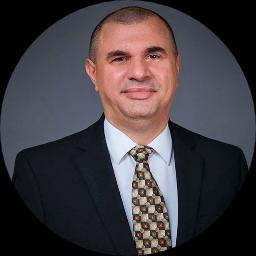
About Eric
Eric earned a master’s degree in psychology with a specialty in mental health counseling and also completed a doctoral degree in industrial and organizational psychology. He completed his internship and later obtained his Florida LMHC license. His time practicing in South Florida exposed him to many cultures and shaped his ability to meet people where they are.
In sessions he listens first and tailors methods to each person’s needs. He draws on client-centered work, cognitive and behavioral tools, dialectical skills, narrative methods, and solution-focused techniques to guide conversations. Those tools are used to build coping skills, address unhealthy patterns, and set small, practical goals.
Eric helps people with a wide range of issues including intimacy and attachment concerns, LGBT and gender identity matters, caregiver stress, body-image and sexual-culture topics, and work-related struggles. He also supports people dealing with trauma, grief, bipolar mood concerns, and addiction-related challenges.
He offers a nonjudgmental setting where clients can talk through painful experiences and practice new ways of coping. To begin, prospective clients answer a short matching questionnaire and schedule sessions according to the therapist’s availability.
How therapy approaches shape online work
Eric blends client-centered work with cognitive-behavioral and dialectical behavior approaches to guide online collaboration. Client-centered therapy focuses on listening and reflecting so the person feels understood and can shape goals. Cognitive Behavioral Therapy (CBT) looks at thoughts and behaviors and teaches practical skills to reduce anxiety, depression, or unhealthy patterns. Dialectical Behavior Therapy (DBT) offers emotion regulation and distress-tolerance skills that are useful for intense emotions and relationship struggles.Choosing the right approach is part of the therapy process. The therapist will talk with each person about their needs and preferences and then suggest methods that seem most helpful. That plan can be adjusted over time so the work stays practical and goal‑oriented.
Confirm the specific session options before booking so you know what formats are available. Online work can make it easier to fit therapy into a busy day, reduce travel time, and allow shorter check-ins when schedules are tight. It also lets people continue care if they relocate within the same state. Discuss scheduling needs during the matching process to find times that fit everyday life.
Areas of expertise
Primary focus
Also works with
Additional focus areas
Therapeutic approaches
Experience
15+ years
Credentials
Florida
Languages
English, Romanian
Frequently asked questions
What kinds of problems does this therapist help with?
Eric helps people facing stress, anxiety, depression, addictions, grief, relationship and intimacy issues, parenting concerns, career stress, and compassion fatigue, among other topics.
What is his general approach in sessions?
He uses a client-centered stance and mixes cognitive-behavioral, dialectical, narrative, and solution-focused techniques to match each person’s needs and goals.
How much clinical experience does he have?
He has 15 years of professional experience working in mental health settings and community practice.
What credentials and geographic location are listed?
He is a Licensed Mental Health Counselor (LMHC) in Florida and practices from that state.
Which languages are supported for sessions?
Sessions are offered in English and Romanian.
Can international clients work with him?
International clients are not currently accepted.
How are sessions scheduled and what formats are offered?
Before booking, confirm the current session options; the site’s matching process helps schedule sessions according to the therapist’s availability.
How does pricing work for sessions?
Cost varies with location and therapist availability and sessions use a subscription that can be canceled at any time.